
Four steps from sales enquiry to partner call.
Every sales enquiry follows the same path and you can stop at any point. What follows includes the parts a brochure leaves out, because those are the parts that cost people money.
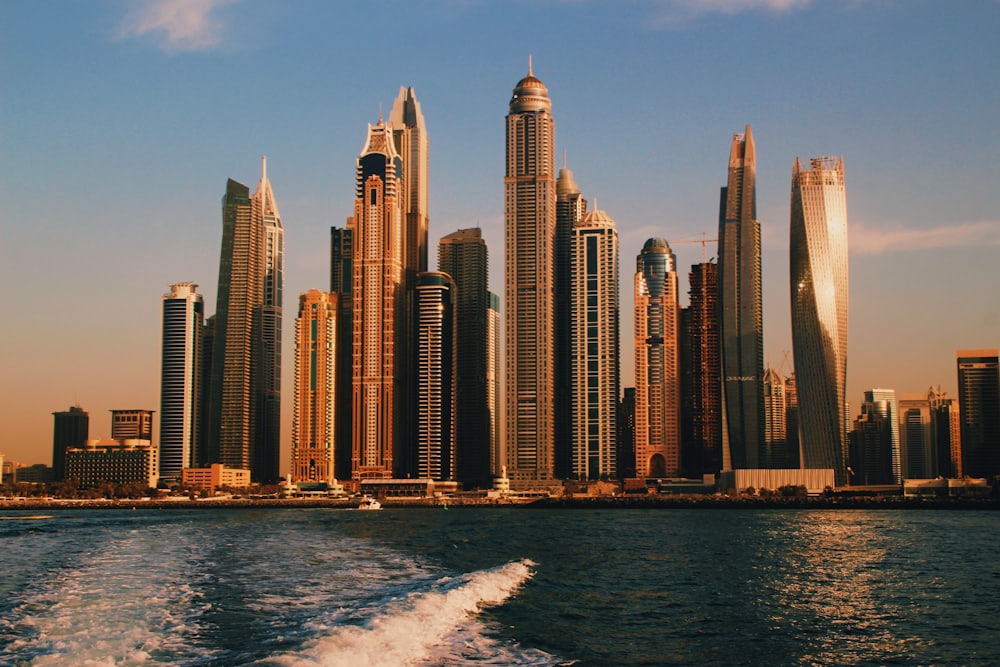
Dubai Marina, roughly 120,000 units due in 2026
Sales enquiry
You send your name, contact details, city, budget band and what you are trying to achieve. That last field matters more than the budget. Rental income and relocation lead to completely different conversations.
Nothing leaves India at this stage. The form reaches us and no one else.
Sales qualification call
We call from Nashik, usually within one working day. Fifteen minutes, covering what you want, what you can commit under your remittance allowance, and whether Dubai or Muscat is the better fit.
This is also where we tell you if neither is. That happens often enough to be worth saying plainly: some people are better served by what they can already buy at home, and we would rather say it on a first call than six weeks later.
We pass the requirement to our licensed sales desk
If it makes sense, we write up your requirement and send it to the partner brokerage for that market. They hold the licence, the market access and the developer relationships. We hold none of those, which is why the introduction exists.
This is the point where your details cross a border, which is why the consent box is never pre-ticked and names both countries.
Partner-led sales call
The desk arranges a call with the developer or sales team whose project matches. You are on it, they are on it, and so are we.
Being on that call is the whole arrangement. You keep someone in your own timezone who heard the original brief and can tell you afterwards whether what was described actually matched it.
The part nobody sends you
The highest advertised yields sit in the most exposed postcodes.
Dubai brochures aimed at Indian buyers lead with yield. Jumeirah Village Circle is quoted around 8 to 9 percent. Dubai South around 9 to 10. Both numbers are real, and both areas sit inside the supply wave.
Roughly 120,000 residential units are expected in Dubai during 2026. Analysts put annual supply growth at about 16 percent across 2025 to 2027 against population growth nearer 5 percent, and 2027 is forecast as the largest delivery year in over a decade at around 70,500 units. JVC, Dubai South, Business Bay, Dubai Residence Complex and Dubai Islands together account for close to 31 percent of what is coming.
Fitch has flagged the possibility of a double digit price decline through this period. Moody's has forecast a more modest correction from 2026. CBRE points to strong absorption and population led demand as a genuine buffer, and a citywide crash is not the central expectation. The credible risk is localised: mid-market apartments in the oversupplied zones carrying something like 10 to 15 percent exposure, while prime villa stock is expected to hold.
So the number on the brochure and the risk on the building are the same fact viewed from two ends. A high quoted yield in a heavily supplied postcode is not a bargain, it is compensation. Knowing which is which is most of what the qualification call is for.
None of this makes Dubai a bad decision. It makes an unqualified Dubai purchase an expensive one.
Your money before handover.
Off-plan buying in Dubai is better protected than most Indian buyers realise. Under Law No. 9 of 2007 every registered project holds a separate escrow account. The developer must put in 20 percent of construction cost up front, and money only releases as RERA approves each construction milestone.
Your claim on the specific unit is registered through the Oqood system when you sign, which bridges the gap until the title deed issues at handover. A further 5 percent of project funds is held for a year after completion against structural defects.
What escrow does not cover: construction delay, poor build quality, buying into an oversupplied area, or anything bought outside the registered framework. It protects your money from being diverted. It does not protect you from a bad choice.
The questions people actually ask us first.
Answered plainly, with the numbers dated. Nothing here is advice on your particular situation.
Can an Indian resident buy property in Dubai?
Yes. Dubai allows foreign nationals to own freehold property in designated areas, and you do not need to live in the UAE or hold a UAE residency permit to buy one. The ownership and the purchase process are the same whether you are a resident Indian or an NRI. What differs is how you are allowed to pay for it from India.
How much money can I legally send from India to buy property abroad?
Under the Reserve Bank of India's Liberalised Remittance Scheme, a resident individual may remit up to USD 250,000 per financial year, April to March. That ceiling covers all your eligible foreign remittances in the year, not property alone. Your bank will ask for Form A2 and its own paperwork. Confirm the current limit with your bank before you commit to anything: it is a policy number, and policy numbers change.
Can I take a home loan to buy a property in Dubai or Oman?
Not from an overseas bank, if you are a resident Indian. FEMA rules prevent resident individuals from borrowing abroad to buy foreign real estate, so the purchase has to be funded from your own money through the remittance route. This is the most common surprise we hear on a first call, and it changes what is realistic at most budgets.
Can my family combine our remittance limits?
Each resident individual has their own annual allowance, and family members can buy jointly as co-owners, each remitting within their own limit. The co-ownership has to be genuine and documented as such. Speak to a chartered accountant before structuring a purchase this way.
Where in Oman can a foreign national actually buy?
Not anywhere. Foreign freehold ownership in Oman is confined to Integrated Tourism Complexes designated by the Omani authorities. Established ITCs include Al Mouj Muscat, Muscat Bay, Muscat Hills, Jebel Sifah and Hawana Salalah. A property outside a designated ITC is generally not available to a foreign buyer, whatever a listing says.
What do the transaction costs look like?
In Dubai the Land Department transfer fee is 4% of the purchase price, with registration and agency costs on top. In Oman a commonly quoted 2026 benchmark for foreign buyers is around 3% on transfer. Treat both as starting points, not totals, and ask for a written cost sheet before you transfer anything. Figures current as of August 2026.
Is JebuK International a broker?
No. The sales conversation starts with us in Nashik and finishes with a licensed partner brokerage in Dubai or Oman, which is the firm regulated to transact. We hold no brokerage licence and no inventory of our own. You pay us nothing. If the fit is not right, we say so rather than pass you on anyway.
Start the sales enquiry.
A minute to send, and the call afterwards tells us where the purchase should go.
Start a sales enquiry